Eric Alliez
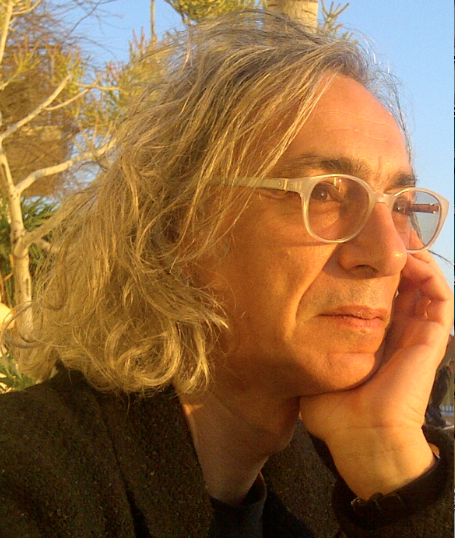
Éric Alliez (b. 1957), who earned his ‘Doctorat d’État’ with a dissertation defended in 1987 under the supervision of Gilles Deleuze, is a professor of Philosophie et Créations contemporaines en art at Paris 8 University since 2010. He has been a research associate at the Centre for Research in Modern European Philosophy, Kingston University (London) until the ordered closedown of the Centre in 2025, and a tenured or visiting professor in many universities and art schools worldwide.
His publications in English include Capitalism: Concept, Idea, Image. Aspects of Marx’s Capital Today (ed., with P. Osborne and E.-J. Russel Radical Philosophy Publishing, 2019), Wars and Capital (with M. Lazzarato, Semiotext(e), 2018 [2016]), Undoing the Image: Of Contemporary Art (3 vol., Urbanomic, 2018-2022 [2013]), The Brain-Eye. New Histories of Modern Painting (with the collaboration of J.-Cl. Martin, Rowman and Littlefield International, 2017 [2007]), Transdisciplinary Problematics (ed., Theory, Culture and Society, Special Issue, 2015), Spheres of Action: Art and Politics, (ed., with P. Osborne, Tate Publishing, 2013), The Guattari Effect (ed., with A. Goffey, Continuum, 2011), The Signature of the World (Continuum, 2004 [1993]), Capital Times (University of Minnesota Press, 1997
[1991], preface by G. Deleuze).
Most recent book: Duchamp avec (et contre) Lacan. Essai de mutologie queer, Les Presses du réel, 2022, 336 p.; Undoing the Image: Of Contemporary Art (with the collaboration of Jean-Claude Bonne), Translation by Robin Mackay, Urbanomic, Vol. 3, Duchamp Looked At (From the Other Side), 2022, 275 p. / Duchamp With (and Against) Lacan. An Essay in Queer Mutology, 2022, 248 p.
Ian Buchanan
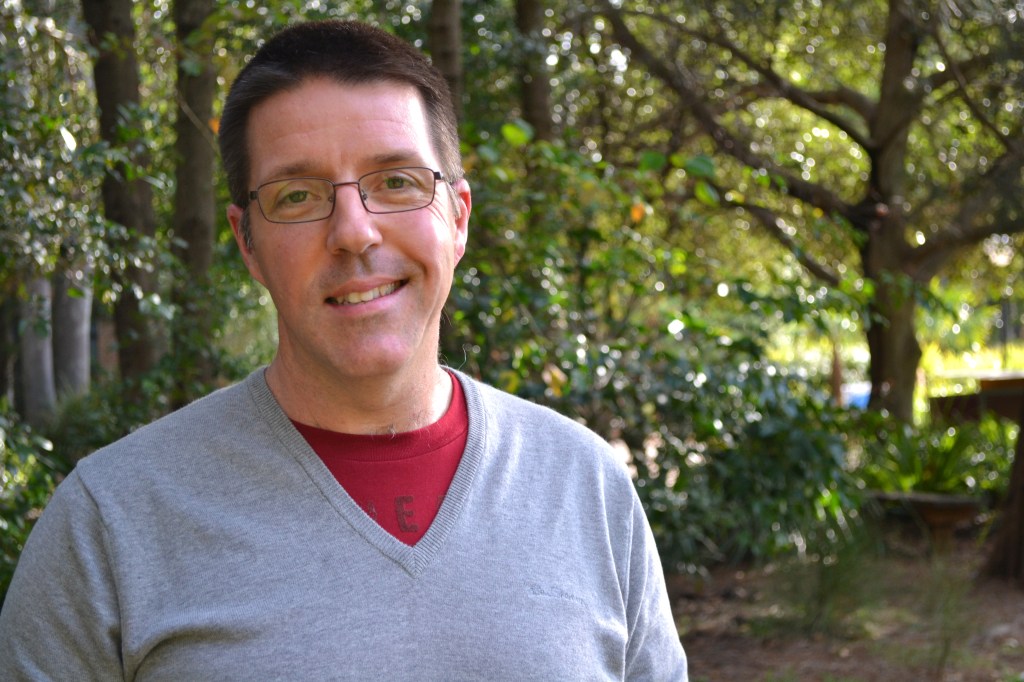
Ian Buchanan is the founding editor of Deleuze and Guattari Studies and the author of Assemblage Theory and Affect (Bloomsbury, 2026) and Assemblage Theory and Method (Bloomsbury, 2021).
The assemblage and the algorithm
Our everyday lives are – to a greater and greater extent – organised by algorithms embedded in every single ‘app’ we use. On social media, for example, algorithms decide what we see and more importantly who we interact with. When we talk about going down the ‘rabbit hole’ on YouTube we mean precisely we have allowed ourselves to be led from one image to another and we only stop when somehow the algorithm gets it wrong. The question I pose is this: can Deleuze and Guattari’s notion of the assemblage help us to understand how algorithms work in contemporary society? I will show that they offer us several conceptual tools such as the notion of transversality that we can use to make sense of how the algorithm works as ongoing project of social engineering.
Andrew Culp

Andrew Culp (PhD Ohio State, 2013) teaches Media History and Theory in the MA Program in Aesthetics and Politics and the School of Critical Studies at CalArts. His published work on media, film, politics, and philosophy has appeared in Radical Philosophy, parallax, angelaki, and boundary 2 online. He also serves on the Governing Board of the Cultural Studies Association.
His interest in media stems from the after-lives of technologies born out of the anti-globalization movement of the 1990s. In his first book, Dark Deleuze (University of Minnesota Press, 2016), he proposes a revolutionary new image of Gilles Deleuze’s thought suited to our 24/7 always-on media environment, and it has been translated into numerous languages including Spanish, Japanese, and German.
Post-Deleuzianism: Thought without Cliché
As the Situationists say, “rhizome,” “becoming,” “deterritorialization,” and “body without organs” are no longer concepts but words spoken with a corpse in your mouth.
Deleuzian scholarship has reproduced the very problem Deleuze spent his career dissolving: the dogmatic image of thought. Whether one works “on” him, “explains” him, “extends” him, “applies” him, or “thinks alongside” him, the field has turned his commitment to thought beyond image into ready-made images, solidifying a doxa that blocks thinking before it begins.
In this talk, I advance what I call post-Deleuzian thought. Following the lesson Deleuze himself took from painting, that the painter must clear the clichés already filling their head before the brush touches the canvas, I propose we do the same to him. Post-Deleuzian thought calls each thinker to create their own singular style, honoring the commitment to thought beyond image by refusing to let him become a cliché.
Dorothea Olkowski

Dorothea Olkowski is University of Colorado Distinguished Professor of Philosophy Emerita. She is the founding Director of Women’s Studies and Cognitive Studies. Olkowski is the author of more than one hundred twenty-five articles and fourteen books, including her most recent publication, Deleuze, Bergson, and Merleau-Ponty, The Logic and Pragmatics of Affect, Perception, and Creation (Indiana University Press, 2021). She is the author of the Internet Encyclopedia of Philosophy article, Postmodernism (2025) and has authored numerous encyclopedia essays on Gilles Deleuze, as well as essays on Luce Irigaray, Phenomenology, and Feminist Philosophy of Science. Her work has been translated into five languages and she held fellowships in Australia, China, Canada and the US. Olkowski has recently conducted student seminars on human versus machine intelligence in China and India and (forthcoming) in Argentina. She currently resides in France.
Corrupting the Youth? Transversal Creation in Deleuze and Guattari
Tracing Deleuze and Guattari, we claim to value structures orienting difference and we hope to anticipate new trajectories, yet we do this without being able either to insist upon or deny specific dynamical systems which produce specific determinate events. If so, our work is even more difficult today than it was for our predecessors, the privileged academics of the post-WW II decades because, as for the ancient Athenians standing up against so many other Greek regions, war is once again always on our doorsteps, and the lives of so many are continuously in peril. Our world appears to us to be so very fragile, barely holding together in the face of dominant structures. Given our current situation, how can we speak and debate and agonize with an awareness of the necessity of remaining open to what we do not yet understand, what our theories do not entirely explain, and what the youth that we teach will still need to work out for themselves and for their own futures? This is why we are here: to discuss, to dispute, to agonize over whether or not there may be, between Deleuze and Guattari, and also between all of us, new structures and concepts, organized by their open transversality of thought embedded in the great personae of philosophy and pushing us from there into the uncertain future.
Anne Querrien

Anne Querrien, born 1945, student activist, met Felix Guattari in 1965, and shared his political and research activities in the journal Recherches and in the CERFI, the research center he founded. After 1980 the CERFI was no longer funded by the State as during the 70ies. She worked in the Ministry for Infrastructures, which became for the Ecological transition around 2000. She was the editor of a social science journal called Les Annales de la Recherche Urbaine. In 2010 she was asked to retire. She participated since in journals Multitudes and Chimeres, which are both inspired by Deleuze and Guattari’s works. She is the author of only one book, L’école mutuelle, une pédagogie trop efficace (2004) and plenty of papers in journals and collective books.
Transversal practices with Felix Guattari and after
The talk will follow the relation between social change and transversality established by Felix Guattari in 1964. It will describe the practices of transversality in four fields, the first two known with Felix, the other two tried after.
How transversality moves social institutions (examples: psychiatry, care of babies, elementary schools, university).
Transversality as a new attitude in political activism.
Building of the urban research, and experiencing the urban/rural division in suburbs.
Transversality, ecology and communing: towards a new economy.
And as a conclusion I shall ask: may schizoanalytical cartographies help to increase transversality in local situations?
Charles J. Stivale
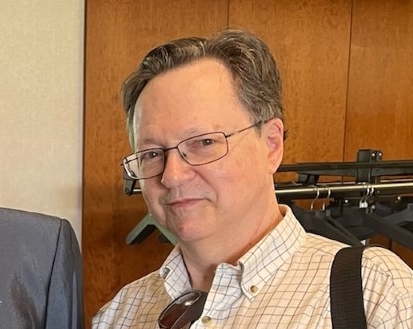
Charles J. Stivale is Distinguished Professor Emeritus of French at Wayne State University. Besides being author of works on Deleuze and Guattari, he is co-translator of Gilles Deleuze, The Logic of Sense (with Constantin V. Boundas and Mark Lester), translator of subtitles for Gilles Deleuze from A to Z (2012 DVD of L’Abécédaire de Gilles Deleuze), and of On Painting, Courses March-June 1981 (2025) and On Spinoza (2026), both with the Deleuze Seminars Translation Collective. He serves with Daniel W. Smith as co-director of the Purdue University Deleuze Seminars website (deleuze.cla.purdue.edu).
Texts, Lines and (Audio)Tapes: Deleuze, Transversality, and the Archive
One result of my work with Daniel W. Smith on developing The Deleuze Seminars (deleuze.cla.purdue.edu) has been to ask how we might conceive of Deleuze’s relation to the archive and how it relates to elements of transversality. This talk’s title contains these key elements, notably, the archive emerging with transversal relations to texts, to various conceptions of ‘lines’, and certainly to the material aspects of any archive, in this case, the imperfect (and bygone) medium of audiotapes. As vast as the Deleuze Seminars archive may be, the topic of the archive itself extends transversally and perhaps rhizomatically beyond a specific project toward different lines of thought and flight, notably, how “archive” is a term inflected for Deleuze via Foucault, but also toward Deleuze’s own sense of the archive. Hence, in seeking my own path in relation to Deleuze and the archive, I propose to discern different ways to extend this understanding transversally in diverse research directions.
 dgs2026